Best Places to Visit in Jaisalmer in 2 Days (2026): Golden Fort, Havelis, Gadisar Lake and Sam Desert
Two days in Jaisalmer might sound rushed on paper, but on the ground it actually works beautifully. The old city is compact, the main sights are clustered, and the desert is just far enough away to feel wild without stealing half your day in driving. If you use those 48 hours wisely, you can walk through a living golden fort, wander sandstone havelis, sit by a quiet lake, explore eerie ruins and still end your trip on soft dunes under a star‑filled sky.
This long‑form 2026 guide takes your raw ideas and turns them into a smooth, human‑sounding itinerary article that fits perfectly on a travel website. It uses your existing places and images—Jaisalmer Fort, Patwon Ki Haveli, Gadisar Lake, rooftop cafés, Thar Desert, Khaba Fort, Bada Bagh, Kuldhara and Sam village—and weaves them into a natural, SEO‑friendly flow. No robotic tone, no brackets, no placeholders. Just clear English that feels like one experienced traveller explaining the city to another.
Why Jaisalmer Is a Perfect 2‑Day Stop in 2026
Jaisalmer is often called the Golden City for a simple reason: almost everything you see—fort walls, havelis, temples and even ordinary lanes—has been built from the same warm yellow sandstone. At sunrise and sunset, the whole town glows. Add camel safaris, quiet lakes, ghost villages and royal cenotaphs to that golden base and you get a destination that fits perfectly into any Rajasthan route without demanding a full week of your time.
In 2026, the practical side is working in your favour too. Monument timings and ticket patterns are clear, desert safari prices are stable across operators, and Jaisalmer’s tourism infrastructure has matured enough that you can cover a lot in a short stay without chaos. That is why two days are enough to see the best places in Jaisalmer as long as you organise your time around one city day and one desert day.
Day 1: Jaisalmer Fort, Havelis, Gadisar Lake and Rooftop Sunsets
Your first day is all about the city itself—its living fort, carved mansions, lakeside calm and rooftop views. Most of this can be done on foot with short auto‑rickshaw rides when needed, which keeps things relaxed and gives you plenty of chances to wander into side lanes and interesting corners.
Jaisalmer Fort – Walking Through a Living Golden Fort
Jaisalmer Fort is the city’s landmark and your obvious starting point. As you approach from the road, the fort looks like a huge golden crown rising straight out of the desert. Built in the 12th century and expanded as trade and power grew, it ranks among the few large forts in the world that are still properly lived in. That single fact changes everything about how it feels compared to a typical museum‑style fort.
Inside the thick sandstone walls you find layers of everyday life stacked on centuries of history. There are houses and guesthouses with laundry hanging from balconies, small hotels and cafés, shops full of textiles and handicrafts, shrines, temples and narrow lanes that bend and twist in ways a neat city planner would never design. Children run along the alleys, scooters squeeze past at impossible angles and holy men drift by in saffron robes. It is messy, atmospheric and incredibly alive.

As you pass through the arched gateways and up the steep ramps, it feels like walking backward through time. Old wooden doors and faded painted signs share space with new cafés and guesthouse boards. Many facades show elaborate carved stone brackets and arches, a reminder that Jaisalmer was once a powerful centre on trade routes linking India with Central Asia and beyond. Rooftop bars and cafés around the fort open onto views that stretch over a sea of flat rooftops and on to the desert edge, especially beautiful at sunset or under cool winter light.
There is no charge just to wander inside the fort gates. You are free to walk the lanes, visit shops and sit at cafés. Fees apply only when you enter specific sections such as the palace museum or Jain temples. That makes it easy to adjust your plan on the fly: if you feel like going deeper, you can; if you just want to enjoy walking around, you are never forced into buying a ticket.
Fort Palace Museum and Heritage Centre
If you want a fuller sense of royal life inside the fort, the Fort Palace Museum and Heritage Centre is worth your time. Entry prices in the 2025–26 season remain very reasonable for Indian visitors and still fair for foreign tourists, with small camera and video charges if you want to shoot more than casual photos. The museum route leads you through audience halls, private rooms, balconies and courtyards where rulers received guests, discussed politics and lived their daily lives.
Some rooms have period furniture, weapon displays or old household items; others are more about the architecture and views. Certain terraces open onto long views over Jaisalmer’s clustered roofs, a perfect reminder of how the fort always sat at the top of the city’s social and physical structure. Plan at least two to three hours for the fort overall if you want to see the palace, step into a Jain temple and still have time for aimless wandering and a rooftop chai break.
Tour of the Havelis on Foot – Patwon, Nathmal and Salim Singh
Once you step back down from the fort, the city’s merchant history is waiting for you just outside its walls. The old streets nearby are home to Jaisalmer’s famous havelis—grand mansions built by wealthy trading families when camel caravans were still carrying spices, textiles and jewellery across the desert. If the fort is about power, the havelis are about money and taste.
Havelis in Jaisalmer share certain traits: intricate stonework, jutting balconies, carved screens and faces that look almost like lace frozen in sandstone. A slow walking tour that covers Patwon Ki Haveli, Nathmal Ki Haveli and Salim Singh Ki Haveli gives you a strong sense of this merchant world without needing separate rides between each building, because they all sit relatively close to one another in the old city maze.

Patwon Ki Haveli – The Masterpiece Mansion
Patwon Ki Haveli is the most impressive of the three and deserves a longer, dedicated visit. Rather than a single house, it is actually a cluster of five havelis built by a wealthy brocade merchant family. From the front it appears as one continuous facade, so richly carved that it looks like someone has draped golden lace over a block of stone.
Inside the main museum sections you can step into rooms with painted walls, mirror‑work panels and old furniture that hint at how affluent families lived. Displays of household items and trade objects, along with information panels, help you imagine the everyday rhythm behind all that decorative luxury. Current tickets for Patwon Ki Haveli remain modest for Indian travellers and still reasonable for foreign visitors, with optional charges for cameras and video. Typical timings follow a standard daytime pattern starting around 9:00 am and closing by early evening, which fits neatly into a city‑focused Day 1.
Nathmal Ki Haveli and Salim Singh Ki Haveli
A short walk away, Nathmal Ki Haveli stands out because of its twin‑designed facade. The story often told is that two brothers built each half separately and met in the middle, which would explain subtle differences in carving on each side. Today most visitors simply admire it from the street, taking photographs and watching how local life flows around it. There is no fixed “museum‑only” ticketing structure widely enforced for the exterior, which keeps this stop flexible and time‑efficient.
Further along, Salim Singh Ki Haveli catches the eye with its unusual peacock‑shaped balcony and arched upper storeys that lean slightly out over the lane. Compared to Patwon, it feels more vertical and dramatic. Updated fee charts show small entry prices for Indians and higher but manageable ones for foreigners if you choose to go inside, again accompanied by modest camera charges and standard daytime timings. Together, these three havelis form a compact walking circuit that can easily fill half a day with architecture, photography and street‑level people watching.
Gadisar Lake – Calm Water and “Floating” Temples
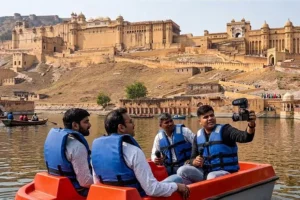
After a heavy dose of stone carving and city energy, Gadisar Lake provides a softer contrast. This man‑made lake sits near the old city and was originally built as a water reservoir, but today it’s just as important as a place to breathe and slow down. Ghats, carved gateways and little shrines frame the water on each side, while small temples and pavilions appear to float out on the surface when the water level is high.
Gadisar fits beautifully into either sunrise or sunset. In the morning, locals come to pray, walk or sit quietly as the first light hits the water. Photographers love the way the arches and pavilions reflect in the still surface. Later in the day, visitors may rent pedal boats or rowboats to drift closer to the shrines. Recent pricing patterns in 2026 show pedal boats and rowboats offered at clear per‑boat rates, usually grouped by how many people they can carry. There is no entry ticket to simply walk along the lake edge—you only pay if you decide to go out on the water.

Roof Hopping – Cafés and Sunset Views Over the Golden City
As the sun begins to drop, Jaisalmer’s rooftops might be the single most enjoyable place to be. The cityscape is full of rooftop cafés and small restaurants, especially in and around the fort and the older quarters. Each terrace offers a slightly different frame: some look almost straight into the fort walls, others sit further away and show the fort resting above a sea of flat roofs.
After a day of climbing steps and walking narrow streets, there is something deeply satisfying about finding a rooftop, ordering a chai or something cold to drink and just staying put while the sky slowly changes colour. The fort moves from bright gold to orange to a darker silhouette as house lights flicker on below you. Some rooftops appear regularly in blogs and reviews, but part of the charm lies in discovering your own favourite terrace by following a staircase or a quiet signboard. There is no separate charge for simply going up—your “ticket” is whatever you choose to drink or eat—so roof hopping is one of the easiest, most flexible ways to end your first day.

Day 2: Bada Bagh, Kuldhara, Khaba and the Thar Desert at Sam
Your second day pulls you outward—away from the tight lanes and into open landscapes. It’s the day you see cenotaphs silhouetted against the sky, wander ghostly streets in a ruined village and ride out into the Thar Desert for camel safaris, jeep rides and campfires under the stars.
Bada Bagh – Royal Cenotaphs in Desert Light
Start early and head to Bada Bagh, a royal cenotaph complex a short drive outside Jaisalmer. Here, domed chhatris stand on elevated platforms across a gentle hill, each one dedicated to a different member of the ruling family. From afar, the domes form a beautiful line against the horizon; from up close, you can appreciate the carved pillars and decorative details that set each cenotaph apart.
At sunrise or sunset, the sandstone domes burn a deeper gold as the light skims across their surfaces. Many photographers rate Bada Bagh as one of the most atmospheric places near Jaisalmer, and it has already appeared as a backdrop in films and music videos. Entry fees for 2026 remain small for Indian travellers and reasonable for foreigners, with standard day timings roughly from morning to early evening. If you care about light and quiet, a morning visit is ideal; if you want drama and silhouettes, late afternoon works best.

Kuldhara Village – Heritage Site with Haunted Legends
From Bada Bagh, you can continue to Kuldhara, one of the most talked‑about ghost villages in Rajasthan. About 20 kilometres from the city centre, Kuldhara today is a managed heritage site where visitors roam through ruins that still hint at a once‑prosperous community. Low stone walls, broken roofs and empty courtyards stretch into the sand, with hardly any signs of modern life within the main spread of the village.
Local stories say that the original Paliwal Brahmin inhabitants left overnight centuries ago to escape oppression, cursing the land as they departed so that no one else could live there. Whether you believe the legend or not, walking through Kuldhara is a striking experience. A small fee is normally collected at the gate, covering both vehicles and visitors, and simple signboards discourage staying after sunset. In a 2‑day Jaisalmer itinerary, an hour at Kuldhara fits easily between morning cenotaph visits and desert plans, giving you just enough time to wander the main lanes and climb a few walls for wide views.

Khaba Fort – Abandoned Fort with a Mysterious Past
Khaba Fort, reachable by a short drive through the desert, adds another layer to this theme of abandonment. The fort stands above the remains of a village once occupied by Paliwal Brahmins, the same community linked to Kuldhara’s history. As with Kuldhara, stories of curses and sudden departures swirl around Khaba, giving it a slightly eerie but fascinating atmosphere.
From its upper platforms you can look down on the scattered outlines of homes and walls, sitting quietly in the sand below. A small on‑site museum offers basic historical context and displays a few artefacts. Entry fees here fall into the same “low double‑digit” range as other minor heritage sites in the area, with the fort open during standard daylight hours. Many longer desert tours in 2026 combine Khaba with Kuldhara and Sam Dunes, giving travellers a mix of history and dunes in one go.

Thar Desert – Camel Safaris, Jeep Rides and Starry Nights
Because Jaisalmer sits right on the edge of the Thar Desert, including at least one safari in your two days is almost non‑negotiable. It is one thing to see sand in pictures and another to walk barefoot on the dunes, listen to the wind and watch the sun vanish behind distant ridges. The dunes around Sam and Khuri are the most accessible and popular stretches for classic camel and jeep safaris.
Current 2025–26 safari menus follow a clear pattern across most operators. Basic camel rides at Sam or Khuri start at budget‑friendly rates per person for a short, roughly hour‑long loop around sunset. Premium camel options, often with longer routes or better sunset points, sit higher in price but offer more time in quieter dune pockets. Jeep safaris in Mahindra Thar‑type vehicles usually begin at modest per‑person rates for quick 30–60 minute rides, then rise as you add length, dune driving and extras.

Combined packages with buffet dinner, dance performances and transfers to and from Sam typically run in a comfortable mid‑range per person, while full overnight packages with camel or jeep rides, camp stay, dinner, show and breakfast often fall into a mid‑to‑upper band depending on the camp’s comfort level. Upgraded tents with attached bathrooms, private seating areas and special services cost more but also give you a more boutique stay. Across all options, the advice stays the same: choose registered, well‑reviewed operators who follow safety norms and treat animals responsibly.
Sam Village – Dunes, Camps and Local Culture
Sam village is the practical and emotional centre of the Jaisalmer desert experience. About 35 kilometres from Kuldhara and roughly an hour’s drive from Jaisalmer, it is where most desert camps, safari jeeps and camel lines gather. As you reach Sam, the road edges fill with tents, flags, parked vehicles and intermittent dunes, creating the unique “temporary town” that springs up each season when the weather is right.
Most camps near Sam offer a standard evening package. You usually arrive in mid‑afternoon, ride into the dunes by camel or jeep, spend sunset sitting on a ridge or walking along the sand, then return to camp for tea, music and dinner. Folk musicians and dancers perform on a central stage, guests sit around low tables or cushions, and dinner is served buffet‑style. After the show either you drive back to Jaisalmer city or stay overnight in a tented room and sleep under a sky full of stars.

Entry to the Sam Sand Dunes area itself generally does not involve a separate government ticket. Instead, you pay the camp or safari operator directly for whichever package you choose. With a two‑day itinerary, the most common pattern is to keep one evening—either the first or second—open for Sam, timing your arrival so you reach the dunes by about 4:00 pm. That leaves enough time to enjoy both the light and the cultural programme without feeling rushed on the drive back or before bed at your camp.
Putting It All Together: Choosing the Best 2‑Day Jaisalmer Plan for 2026
With so many tempting places packed into a small area, the real skill lies in balancing everything. In 2026, a very practical structure for a two‑day Jaisalmer visit looks like this:
- Day 1: Jaisalmer Fort, Jain temples, Patwon Ki Haveli and the haveli district, plus Gadisar Lake and a fort‑view rooftop café by evening.
- Day 2: Bada Bagh and Kuldhara or Khaba in the morning, followed by an afternoon and evening at Sam Sand Dunes with a safari and cultural show, staying overnight at a camp or returning to the city at night.
Within that framework there is plenty of room to adjust. Some travellers replace Kuldhara with Khaba Fort if they are more interested in forts than villages. Others skip one haveli to make space for a museum or extra rooftop time. Photographers may schedule Bada Bagh specifically for sunrise or sunset and move other pieces around it. Because monument and safari prices are clearly published for the current season, it is also easy to match these choices to a given budget before you arrive.
Quick Reference Table: Best Places to Visit in Jaisalmer in 2 Days
This table gives a handy at‑a‑glance view you can use on your website or for your own planning. It connects each key place with its role in a 2‑day itinerary.
| Place | Main Experience | Suggested Time | Fits Best On |
|---|---|---|---|
| Jaisalmer Fort | Living golden fort, palace museum, Jain temples | Half day | Day 1 morning and midday |
| Patwon / Nathmal / Salim Singh Havelis | Merchant mansions, sandstone carving, street life | Half day | Day 1 midday and afternoon |
| Gadisar Lake | Calm water, shrines, optional boating | 1–2 hours | Day 1 sunrise or evening |
| Rooftop Cafés | Fort and city views at sunset | 1–3 hours | Day 1 evening |
| Bada Bagh | Royal cenotaphs, silhouettes, photography | 1–2 hours | Day 2 early morning or late afternoon |
| Kuldhara Village | Abandoned village, legends, open desert | 1 hour | Day 2 morning |
| Khaba Fort | Ruined fort, village ruins, museum | 1 hour | Day 2 morning |
| Sam Sand Dunes | Camel or jeep safari, sunset dunes | Afternoon and evening | Day 2 late afternoon and night |
| Desert Camp at Sam | Folk show, dinner, stargazing, tent stay | Overnight | Night 2 (optional) |
FAQ: Best Places to Visit in Jaisalmer in 2 Days (2026)
Is 2 days really enough to see Jaisalmer?
Yes. Two days are enough to see Jaisalmer Fort, the main havelis, Gadisar Lake, Bada Bagh, either Kuldhara or Khaba and Sam Sand Dunes without turning your trip into a blur. You will not tick every museum or side street, but you will leave with a solid picture of the Golden City’s fort, merchant houses and desert edge.
Which places are must‑visit if I have very limited time?
If time is extremely tight, prioritise Jaisalmer Fort, Patwon Ki Haveli, Gadisar Lake and Sam Sand Dunes. These four experiences together will give you fort life, merchant architecture, lakeside calm and real dunes. If you can add one more stop, choose either Bada Bagh for cenotaph silhouettes or Kuldhara for ghost village atmosphere.
Should I stay one night in the city and one night in the desert?
That is a very popular approach. The first night in the city lets you explore the fort after dark and enjoy rooftop views with easy access to your hotel room. The second night in the desert gives you campfires, folk music and star views that you simply cannot get inside town. If you prefer simplicity, you can stay both nights in Jaisalmer city and visit Sam just for an evening safari and show.
What is the best time of year to follow this 2‑day plan?
For comfort and clear skies, November to February is ideal. October and March are also good, with slightly warmer days but still manageable heat. If you come in hotter months or during the monsoon, keep your fort and city sightseeing to early morning and evening and schedule desert time for late afternoon onward so you are not standing on dunes in the harshest mid‑day sun.
Can I do all this with public transport or do I need a car and driver?
Inside Jaisalmer city you can easily move by foot and auto‑rickshaw between the fort, havelis, Gadisar Lake and your hotel. For Bada Bagh, Kuldhara, Khaba and Sam, hiring a car and driver or booking a packaged tour is much more practical. Distances are not huge, but having one vehicle and driver who stays with you all day saves time and energy on a short 2‑day schedule.
Is Jaisalmer safe for solo travellers and families?
Jaisalmer is widely considered one of the friendlier and more relaxed cities in Rajasthan for travellers. The main tourist areas—fort, havelis, lake and Sam camps—are used to hosting solo travellers, couples and families from all over the world. Normal travel common sense applies: keep valuables secure, avoid very isolated spots late at night, and follow known operators for desert safaris. Within those basic limits, most visitors feel comfortable exploring.
How should I split my budget between city sights and desert experiences?
City sights such as fort sections, havelis, Bada Bagh and Kuldhara tend to be relatively light on the wallet, especially for Indian visitors. Desert experiences at Sam—camel or jeep safaris, dinners and overnight camps—usually make up the larger part of a short Jaisalmer budget. A common pattern is to save on shopping and expensive meals in town so you can comfortably afford a good quality safari package and, if possible, one night in a mid‑range or better desert camp.